

Common Pronunciation Mistakes Among Arabic Learners Who Are Non-Native Speakers
Introduction
Accurate pronunciation is a cornerstone of spoken language proficiency. In Arabic, precise articulation and distinct phonetic features are central to mastering the language. Arabic boasts a unique phonological system, featuring deep, emphatic, and breathy sounds that are rare in most other languages.
While this sound richness contributes to the beauty of Arabic, it also presents major challenges for non-native speakers. Many Arabic learners struggle to identify or produce certain sounds due to phonological differences between Arabic and their native languages.
This article provides a pedagogical analysis of common pronunciation errors encountered by learners of Arabic as a second language. It includes practical examples, classification tables, and effective correction strategies to enhance pronunciation teaching and support learners’ oral communication skills.
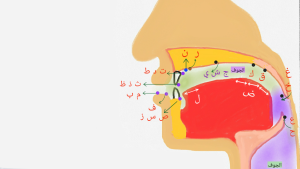
Key Pronunciation Errors Among Non-Native Arabic Learners
1. Difficulty Pronouncing Unique Arabic Sounds
Arabic includes sounds like (ع, ح, ص, ض) that are absent in many other languages. Learners often mispronounce them due to lack of auditory and articulatory familiarity.
| Letter | Incorrect Pronunciation | Example (Incorrect) | Correct Form |
| ع | A / Y | Aly bin Abi Talib | Ali |
| غ | Q / K | Qareeb instead of Ghareeb | Ghareeb |
| ح | H | Hamad instead of Ḥamad | Ḥamad |
| ص | S | Salat instead of Ṣalat | Ṣalat |
| ض | D | Daw instead of Ḍaw’ | Ḍaw’ |
2. Confusion with the Glottal Stop (Hamza – ء)
The Arabic hamza has no exact equivalent in many learners’ mother tongues. This often leads to omission or substitution, resulting in incorrect pronunciation.
| Common Mistake | Cause | Incorrect Example | Correct Form |
| Dropping hamza | Avoiding the glottal sound | Sama | Sama’ |
| Replacing with vowel | Mother tongue influence | Aamel | A’mal |
| Over-pronouncing | Incorrect voice stress | A’akul | Ākul |
3. Confusing Singular and Dual Forms
Many learners confuse singular and dual forms, especially with endings like -ān or -ayn, due to limited grammatical understanding.
| Error | Cause | Incorrect Sentence | Correct Sentence |
| Singular instead of dual | Lack of grammar rule knowledge | I have a book (meant two) | I have two books |
| Plural instead of dual | Rushing or L1 interference | I saw the students | I saw the two students |
| Verb mismatch with dual | Weak verb conjugation skills | The boys went (singular verb) | The boys went (dual verb) |
4. Difficulty with Shadda (Gemination)
Shadda indicates letter doubling and changes meaning. Learners often skip or mispronounce it, affecting clarity.
| Error | Example | Meaning | Correction |
| Missing shadda | Mad (not doubling D) | Past tense | Madd (stretch) |
| Overuse | Rassool | Heavy pronunciation | Rasool |
Why Do These Pronunciation Mistakes Happen?
Several factors contribute to pronunciation challenges among non-native Arabic learners:
- Lack of Arabic phonemes in L1:
Sounds like (ع, غ, خ, ض) do not exist in many European languages, making them difficult to pronounce or recognize. - Overreliance on visual learning without auditory training:
Reading silently without sound practice weakens phonological awareness. - Weak auditory discrimination:
Learners may confuse similar sounds (e.g., s/ṣ, q/k, d/ḍ), leading to incorrect meaning and miscommunication. - Lack of immersive Arabic environment:
Limited exposure to real Arabic conversations hinders natural sound acquisition. - Anxiety and rushing:
Fear of making mistakes causes learners to either speak too quickly or suppress key phonetic elements.
How to Fix Common Arabic Pronunciation Errors

Effective correction requires an integrative approach combining sound recognition, articulatory training, and engaging practice. Key strategies include:
- Repetitive active listening:
Use slow, clear audio with short texts for daily listening practice. - Imitation and sound-matching techniques:
Learners repeat after a native speaker and record themselves to compare and correct. - Mirror training:
Watching lip and tongue movements helps learners mimic accurate articulation, especially for deep/throat letters. - Use of pronunciation tracking tables:
Weekly performance tracking helps identify strengths and areas needing improvement. - Interactive apps and games:
Educational tools like “Allimni Arabic” provide instant feedback in real contexts. - Training in sentence context rather than isolated words:
Teaching pronunciation within real phrases (e.g., “I went home”) is more effective than isolated drills. - Pronunciation-based learning games:
Activities like “Who Pronounced It Best?” boost motivation and accuracy through peer voting and repetition.
Conclusion
Teaching pronunciation in Arabic is more than repeating sounds. It requires a deep understanding of phonetics, articulation, and phonological functions. Learners must gradually become aware of their errors, leading to more accurate and fluent speech.
Correct pronunciation is foundational—not decorative. It’s essential for fluency and communication. Therefore, Arabic programs must prioritize it through consistent feedback, sound-focused content, and personalized evaluation tools.
Edited by: Teach Me ArabicTeam
References:
- Common Syntactic Errors in Arabic for Non-Native Speakers: A Study
[PDF Source – Local] - Foreign Learners’ Errors and Their Causes
Al Jazeera Learning - Frequent Arabic Language Errors by Non-Native Learners
Dergipark Article - Grammatical Errors Analysis of Arabic Learners
King Abdulaziz University PDF